
About the Tests
Oesophageal Manometry measures how well the muscles and sphincters (muscular valves) in your oesophagus work. Your oesophagus is the food pipe that carries food and drink from your mouth to your stomach. The test assesses the strength and coordination of muscle contractions when you swallow.
pH (Reflux) Testing measures how much acid reaches your oesophagus, how long acid exposure lasts, and whether reflux episodes coincide with your symptoms. When combined with impedance monitoring, it also detects non-acid reflux.
These tests provide complementary information about swallowing and reflux. They can help your specialist identify the cause of your symptoms and plan appropriate treatment, including assessment before anti-reflux surgery.
The procedure might sound a bit daunting, but in reality, it’s minimally invasive and typically safe. Most patients report only mild discomfort, likening it to the sensation of having a sore throat. The test provides crucial information that can help diagnose various esophageal disorders, making it an invaluable tool in the arsenal of gastroenterologists.
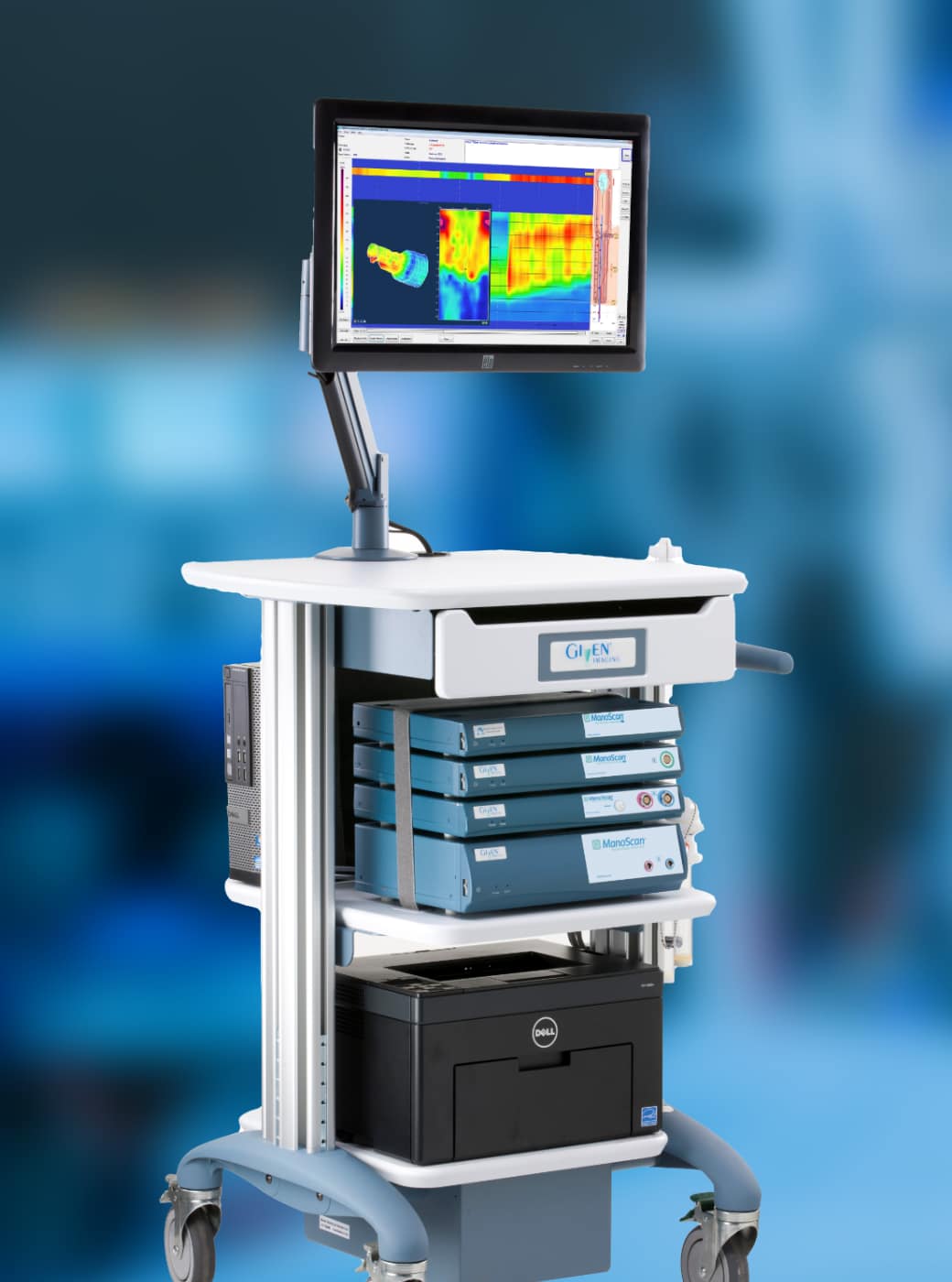
Manometry information sheets
Oesophageal Manometry
Common Questions
Why It Is Done
Investigate difficulty swallowing, painful swallowing or a sensation of food sticking.
Identify problems with oesophageal muscle movement, such as achalasia or oesophageal spasm.
Investigate chest pain after heart-related causes have been assessed.
Assess oesophageal function before anti-reflux or hiatus hernia surgery.
Investigate persistent or new swallowing symptoms after surgery.
Locate the lower oesophageal sphincter to guide accurate placement of a pH catheter.
What to Expect
You will receive fasting instructions and advice about your usual medicines before the appointment. Only change your medicines as directed.
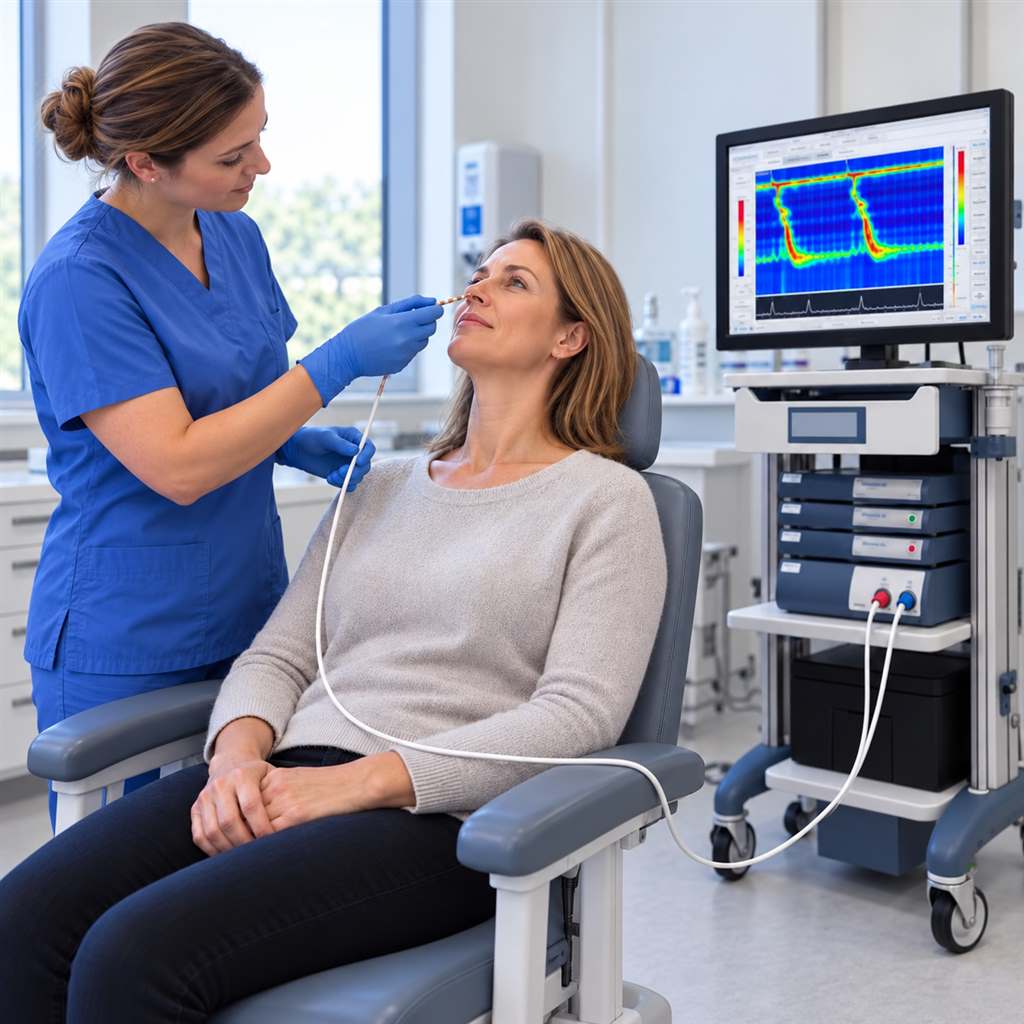
Local anaesthetic is used to numb your nose and, where appropriate, your throat.
A thin, flexible catheter with pressure sensors is gently passed through your nose, down your oesophagus and into your stomach.
You will swallow small amounts of water while the sensors record muscle activity. You may be asked to change position or complete additional swallows.
You remain awake without sedation so you can follow instructions and swallow when asked. You can breathe normally throughout the test.
Catheter insertion may briefly cause gagging or discomfort. Your clinician will guide and support you through this.
The measurements usually take around 20–30 minutes, although additional time is needed for preparation.
How to Prepare
Follow your fasting instructions. Your stomach needs to be empty for the test. Your appointment instructions will explain when to stop eating and drinking, including whether you may have water.
Check your medicines. Provide a current list of prescription medicines, over-the-counter products and supplements. Some medicines affect oesophageal muscle function, so your specialist may recommend temporary changes. Do not stop any medicine unless instructed.
Discuss relevant medical conditions. Let the clinic know if you have diabetes, previous surgery involving your nose, oesophagus or stomach, or difficulty having tubes passed through your nose. If you use insulin or other diabetes medicines, ask for advice before fasting.
Tell us about allergies. Report any known allergy to local anaesthetic or latex before your appointment.
Bring relevant information. Bring your referral and any previous gastroscopy or swallowing-test reports that have not already been sent to the clinic.
Allow time for your appointment. Preparation and explanation take additional time beyond the measurements themselves. No sedation is usually required, so you can generally drive afterwards unless advised otherwise.
After the Test
- The catheter is removed once the measurements are complete.
- If reflux monitoring is also planned, a smaller catheter will then be inserted.
- Follow your clinician’s advice about when to resume eating and drinking, particularly while any throat numbness remains.
- As no sedation is used, you can generally drive yourself home and resume your usual activities.
- Your specialist will review the results and explain what they mean for your treatment.
pH (Reflux) Testing
Common Questions
Why It Is Done
Investigate persistent heartburn or regurgitation.
Assess symptoms that continue despite reflux medication.
Confirm whether abnormal acid exposure is present.
Determine whether symptoms occur at the same time as reflux episodes.
Investigate selected symptoms, such as persistent cough, when reflux is suspected.
Assess reflux before anti-reflux surgery or investigate symptoms after surgery.
Assess acid and non-acid reflux when impedance monitoring is included.
What to Expect
Your specialist will advise whether testing should take place while taking or temporarily stopping reflux medicines. Do not stop them unless instructed.
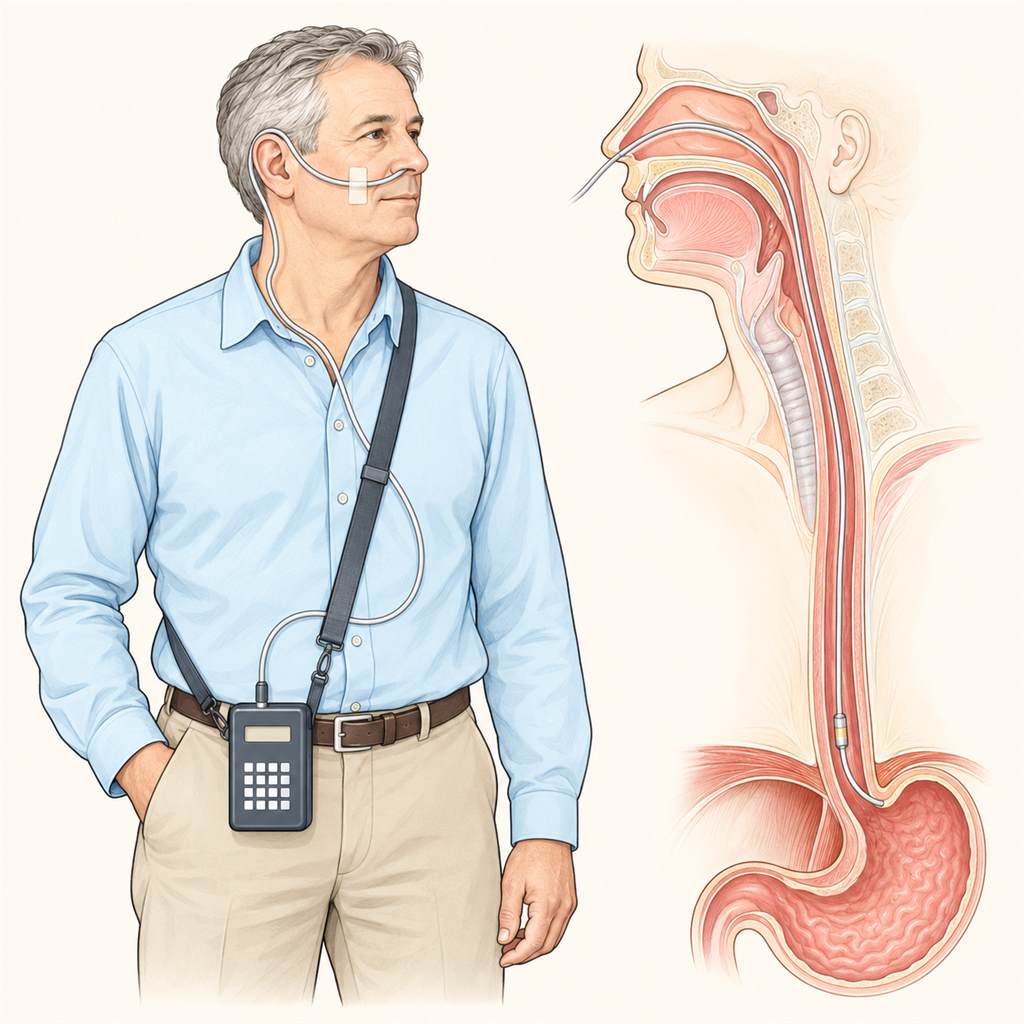
For catheter-based testing, a thin tube is gently passed through your nose into your oesophagus, usually after manometry.
The catheter is secured to your nose or cheek and connected to a small portable recorder.
You go home with the equipment. Monitoring commonly lasts around 24 hours; your clinic will confirm your planned recording period.
Continue your usual meals and daily routine as instructed, so the recording reflects a typical day.
Record meals, symptoms and periods spent lying down or sleeping. Use the recorder’s symptom button as demonstrated.
Keep the equipment dry and follow the nurse’s instructions about bathing, exercise and caring for the catheter.
How to Prepare
Confirm your reflux medication plan in advance. This test may be performed while taking acid-suppressing medicines or after temporarily stopping them, depending on what your specialist needs to assess. Check your instructions well before the appointment, as some changes may need to begin several days beforehand.
Check all reflux treatments. Instructions may differ for proton pump inhibitors, other acid-reducing medicines and antacids. Ask the clinic exactly what to take or withhold, and when. Do not stop treatment without advice.
Follow the fasting instructions for catheter placement. You will need to avoid food and drink for the specified period before the catheter is inserted. Fasting is not normally required throughout the monitoring period.
Shower beforehand and dress comfortably. The recorder must stay dry, so shower before your appointment. Wear loose clothing, ideally a button-front shirt, to make it easier to manage the catheter and recorder.
Plan for a typical day. During monitoring, follow your usual meals and routine as instructed. Avoid deliberately changing your diet to provoke or prevent symptoms, as the aim is to record your everyday reflux pattern.
Plan for recording and equipment return. Be prepared to record meals, symptoms and periods spent lying down. Confirm the monitoring duration and arrangements for catheter removal and return of the recorder before leaving the clinic.
After the Test
Follow your clinic’s arrangements for catheter removal and return of the recorder and diary.
Resume any medicines that were paused according to your specialist’s instructions.
Your specialist will compare reflux episodes with your symptom diary and, where relevant, your manometry findings.
The results will help guide treatment, which may include medication, lifestyle or dietary changes, or consideration of surgery.